
A 14% lift in close rate is what happens when your top performer's instincts show up on every call your team runs. Here is the math, and here is why the coaching model every sales org uses today is already obsolete.
Your best rep closes at twice the rate of your average rep. You know this. Every VP of Sales knows this. The top 20% of the team carries 80% of the number, and the only real question in sales leadership is how to get everyone else to sound a little more like the top 20%.
The answer for the last thirty years has been coaching. Ride-alongs. Call reviews. Gong clips on Monday. QBRs. It works, slowly, and it has one fatal flaw: by the time the coaching reaches the rep, the deal that triggered it is already dead.
TwinsAI’s real-time Conversation Cards changes this. They put your best coach on every call your team runs, live, while the deal is still breathing. And the numbers are big enough that most sales orgs are going to have to rethink what coaching even means.
The $2.8M question
Start with the math, because the math is what matters.
In our beta, teams running Conversation Cards saw close rates increase 14% and sales cycles shrink 11%. Small sample, early data, and we are being careful with the numbers. But run them through a normal sales org and the size of the prize is obvious.
A VP managing twenty reps on a $20M annual pipeline. A 14% close rate lift adds $2.8M in additional closed revenue. Same pipeline. Same headcount. Same comp plan. You did not run a new campaign, hire a new rep, or buy a new data vendor. You just stopped losing deals to questions that never got asked.
Now layer the 11% cycle compression on top. Shorter cycles mean more at-bats per rep per year. A team doing four deal cycles a year starts doing four and a half. That is another 12% on output before you touch anything else. Compound the two effects and the real number on a $20M pipeline is closer to $5M.
That is the kind of math that makes a board meeting easy.
Why coaching has always been a lagging indicator
Here is the thing nobody wants to say out loud about traditional sales coaching. It does not coach the deal that needs coaching. It coaches the next one.
A rep gets on a discovery call Tuesday morning. The prospect says something at minute 17 about their renewal cycle. The rep misses it. The call ends. On Friday, a manager pulls up the recording, spots the missed signal, and flags it. Good coaching moment.
Except the Tuesday deal is already in closed-lost. The question that would have changed the outcome needed to be asked at minute 17 and 3 seconds, not at 4pm on Friday in a conference room. The rep gets smarter for the next call. The deal that paid for the lesson is gone.
Every call review tool in the market is built on this model. AI notetakers. Transcript summarizers. Conversation intelligence platforms. They are all forensic accounting. By the time you know what went wrong, the crime scene is cold, and the rep has been on three more calls making the same mistake.
This is the category every VP of Sales has at least one of in their stack. And it is the category that has produced approximately zero improvement in actual close rates across the industry, because knowing what happened on a call does not change what happened on the call.
What changes when the coach is in the room
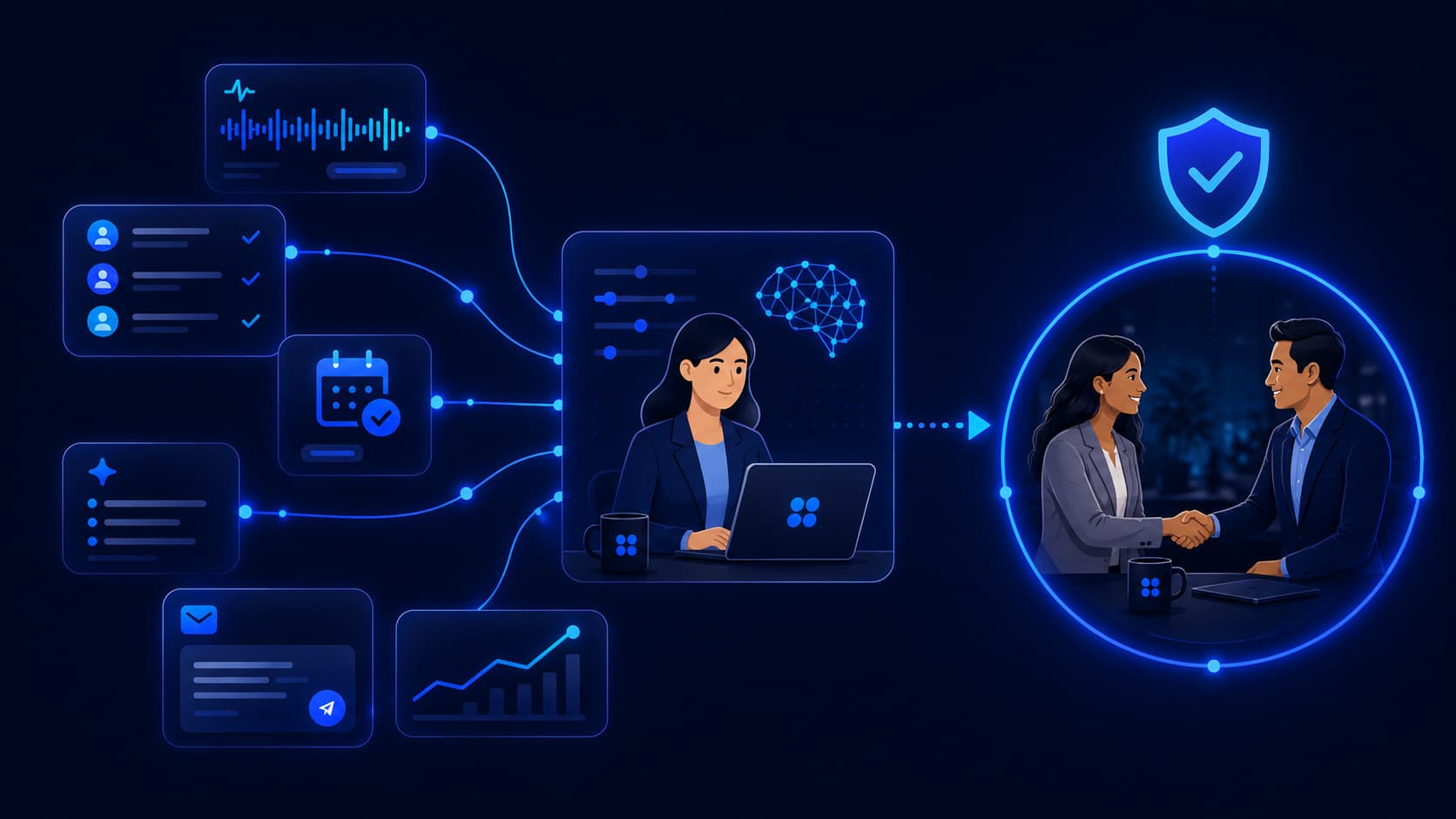
TwinsAI’s Conversation Cards fire during the call, not after it. When a prospect names a competitor, the card surfaces the one weakness your team has been trained to press on. When eight minutes go by without a discovery question, a card nudges. When the rep hedges on pricing, the card shows the number and the logic behind it.
The rep is not reading a script. They are having a conversation with a second brain that knows the deal, the account, your methodology, and every objection your top performer has ever handled. Every rep on the team, on every call, gets the instincts of your best rep whispered to them at the exact moment those instincts matter.
That is the unlock, and that is why the revenue numbers move.
Why we can build this and most vendors cannot
Real-time coaching has one hard constraint: latency. From the moment a prospect says a thing to the moment a card appears on the rep's screen, you have about 800 milliseconds before the coaching stops being coaching and starts being a distraction. Miss that window and the rep is reading a card about a topic the conversation has already moved past. The rep turns it off by the second call.
We built TwinsAI differently. The telephony layer, the streaming speech recognition, and the reasoning layer run inside one pipeline instead of four vendor handoffs. Audio is transcribed in a streaming pass, which means the model is reasoning on partial transcripts while the prospect is still talking, not waiting for them to finish a sentence. Candidate cards are pre-computed and ranked, so when the trigger fires, rendering is near-instant instead of a fresh inference round-trip.
Most importantly we weave in the context - A generic LLM getting a cold transcript fragment and being asked "what should the rep say" is guessing. Our system pre-loads the deal context before the call starts: CRM state, the account's firmographic and technographic profile, prior call history, the methodology your team runs (MEDDIC, Sandler, Command of the Message, whatever it is), your product's competitive positioning, and a learned model of what your top performers actually do on calls. The model is not retrieving mid-conversation. It is already primed. Inference is faster and the output is grounded in your data, not in the generic patterns the model saw during training.
None of this is impossible to replicate. But it is the kind of stack you build when real-time voice AI is the entire thesis of the company, not a feature bolted onto a notetaker. That is the bet we made, and it is the reason the numbers in the beta look the way they do.
Where the money actually lives: the top of the funnel
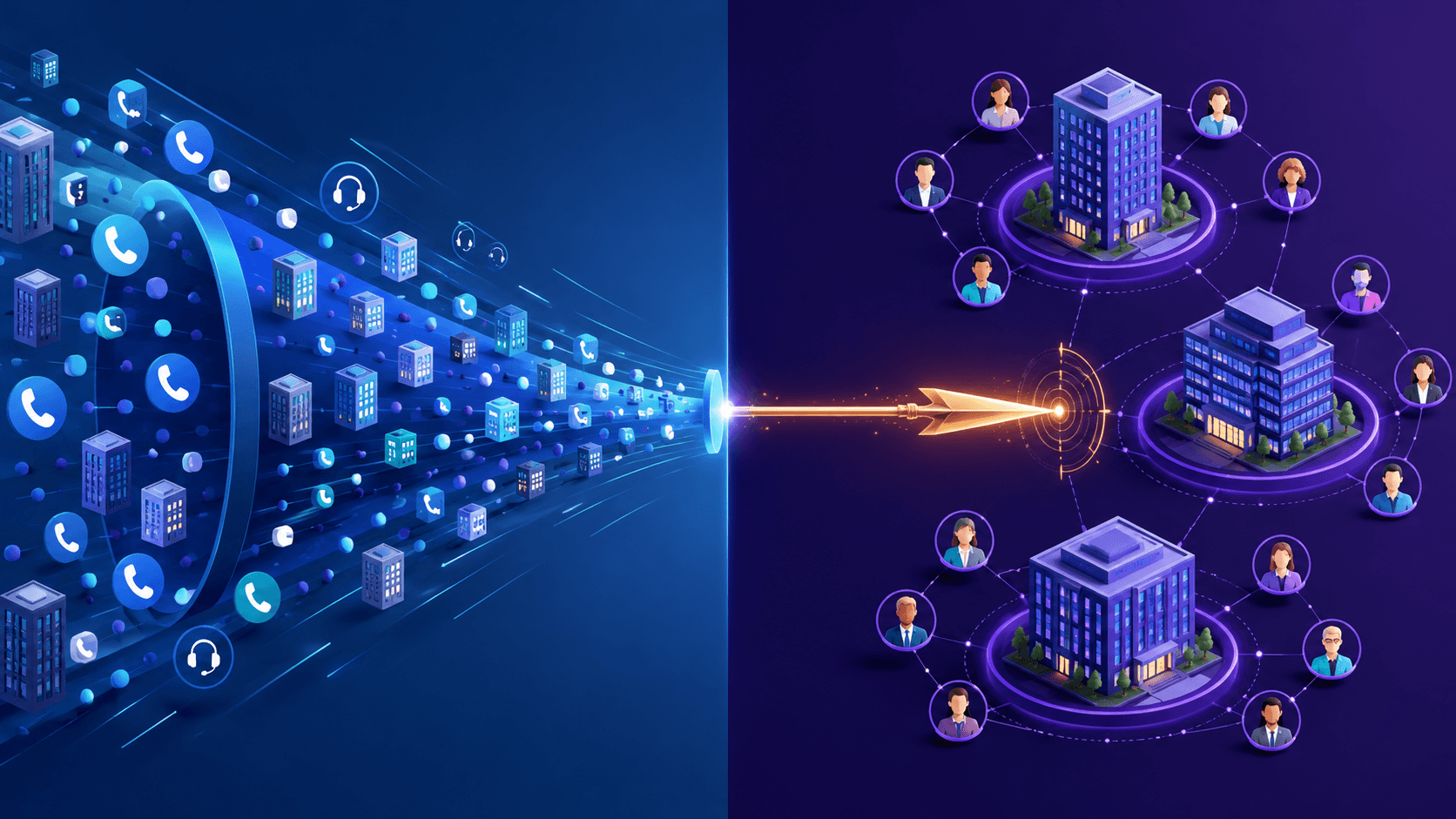
Most sales AI gets sold on the close. That is the wrong place to look. The money is at the top of the funnel, and specifically in discovery, which is where deals are won, lost, or quietly wasted.
Discovery is where qualification happens. Discovery is where the next step gets set, which is the single highest predictor of whether a deal closes at all. Discovery is also where a new rep is most likely to freeze, miss a signal, and let a qualified prospect walk out the back door with a polite "let me think about it."
A live coach in discovery does three things that hit revenue directly.
It improves qualification in the moment. When a prospect says "just exploring," the card surfaces the two follow-up questions that separate real exploration from active buying. The rep does not have to remember. The rep has to listen.
It locks in next steps before the call ends. Deals stall when reps leave discovery with vague commitments. A card that reminds the rep to propose a specific time, with a specific agenda, before the goodbye, is worth more than every Friday coaching session combined.
And it kills bad-fit deals faster. We wrote a whole post on disqualification a few months back because it is the most underrated move in sales. Real-time cards help a rep spot a non-fit in the first ten minutes instead of the fiftieth. Pipeline stays clean. The forecast stops lying.
The CRM benefit is almost a side effect
One thing that does not show up in the headline beta numbers but shows up in every sales ops conversation we have: CRM data actually gets captured.
Because the cards prompt the rep to lock next steps and log key facts during the call, the CRM fills itself in. Stage data is accurate. Next steps are real. The forecast tightens up because deals stop lingering in "stage 4, waiting on prospect" for six weeks pretending to be alive. Sales ops leaders in the beta reported cleaner pipeline data with zero additional process.
If you have ever tried to enforce CRM hygiene by yelling at reps, you know what that is worth.
What this means for the VP and the CTO
If you run sales, the bet is simple. Every rep gets your best coach on every call. The early data says that is worth 14% on close rate and 11% on cycle length, which on a normal-sized team compounds into millions of dollars a year you are currently leaving in closed-lost.
If you are a sales-oriented CTO, the bet is slightly different. You have probably been burned by sales AI that promised to change the number and delivered prettier dashboards. This is not that. This is a system that changes what happens inside the call itself, and the downstream effect on CRM quality alone makes the seat cost pay for itself.
Coaching used to be a thing that happened to deals after they died. Now it happens while they are alive. Your pipeline is going to notice either way. The only question is whether the team making the change is yours or the one you are competing against.
If you want to see what a live coach on every call does to your numbers, we are running a limited proof of value with new customers. Start here.