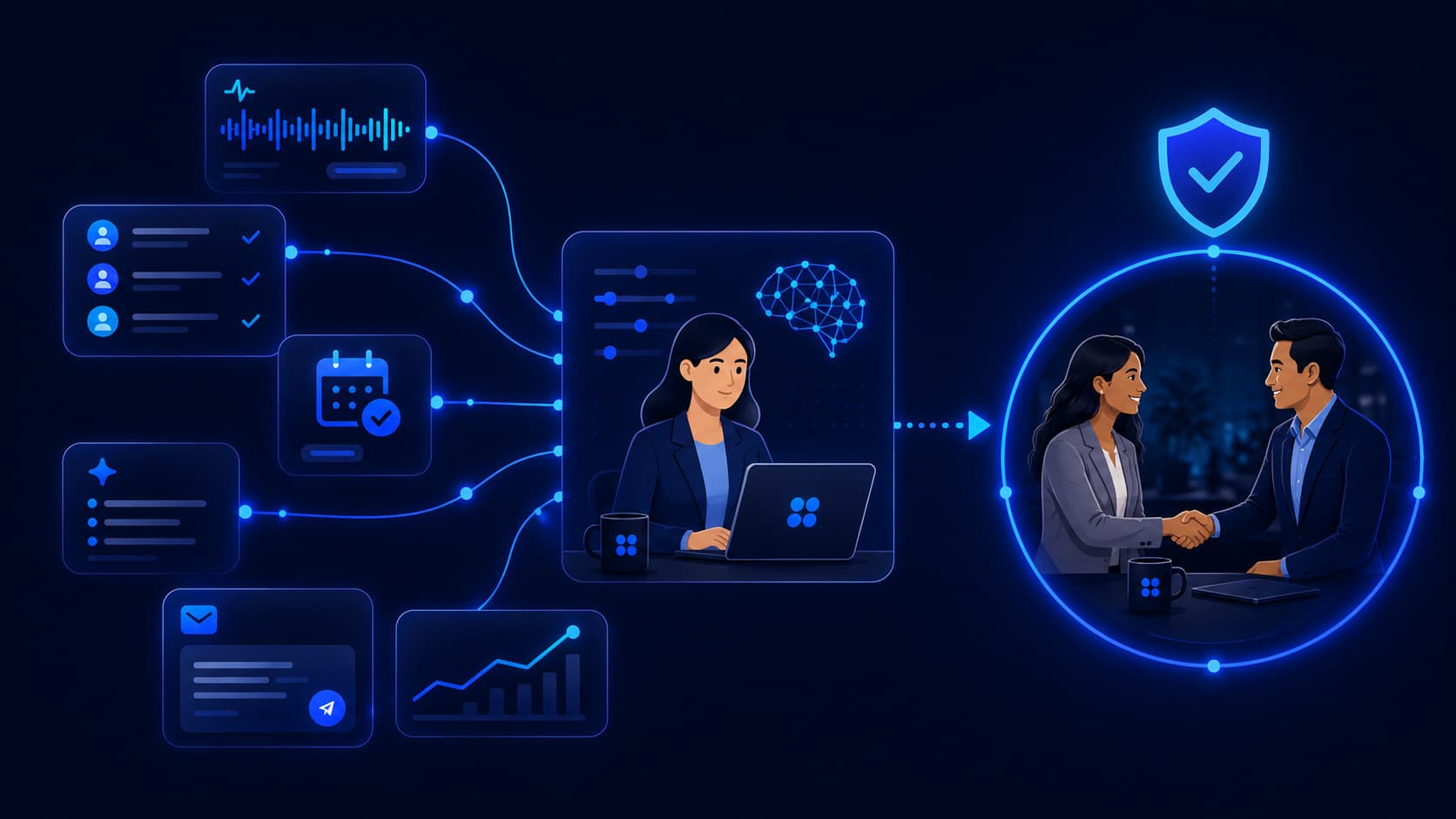
Somewhere in a procurement department right now, an AI agent is reading your website. It's not impressed.
While your team spent the last quarter arguing about whether to implement an AI SDR tool, the other side of the table was automating as well. And nobody in your Monday afternoon pipeline review is talking about it.
Here's what happened while GTM Twitter was debating prompt engineering: Walmart deployed negotiation bots that handle thousands of supplier conversations simultaneously. Enterprise procurement platforms like Fairmarkit started offering autonomous sourcing agents that run RFPs, evaluate bids, and recommend vendors without a human touching the keyboard. Google published an open protocol for agent-to-agent payments. Stripe built transaction rails specifically for when bots buy from bots.
The conversation in most revenue organizations is still stuck on "how do we use AI to sell more." That's the wrong question. The right question is: what happens when your buyer isn't a person?
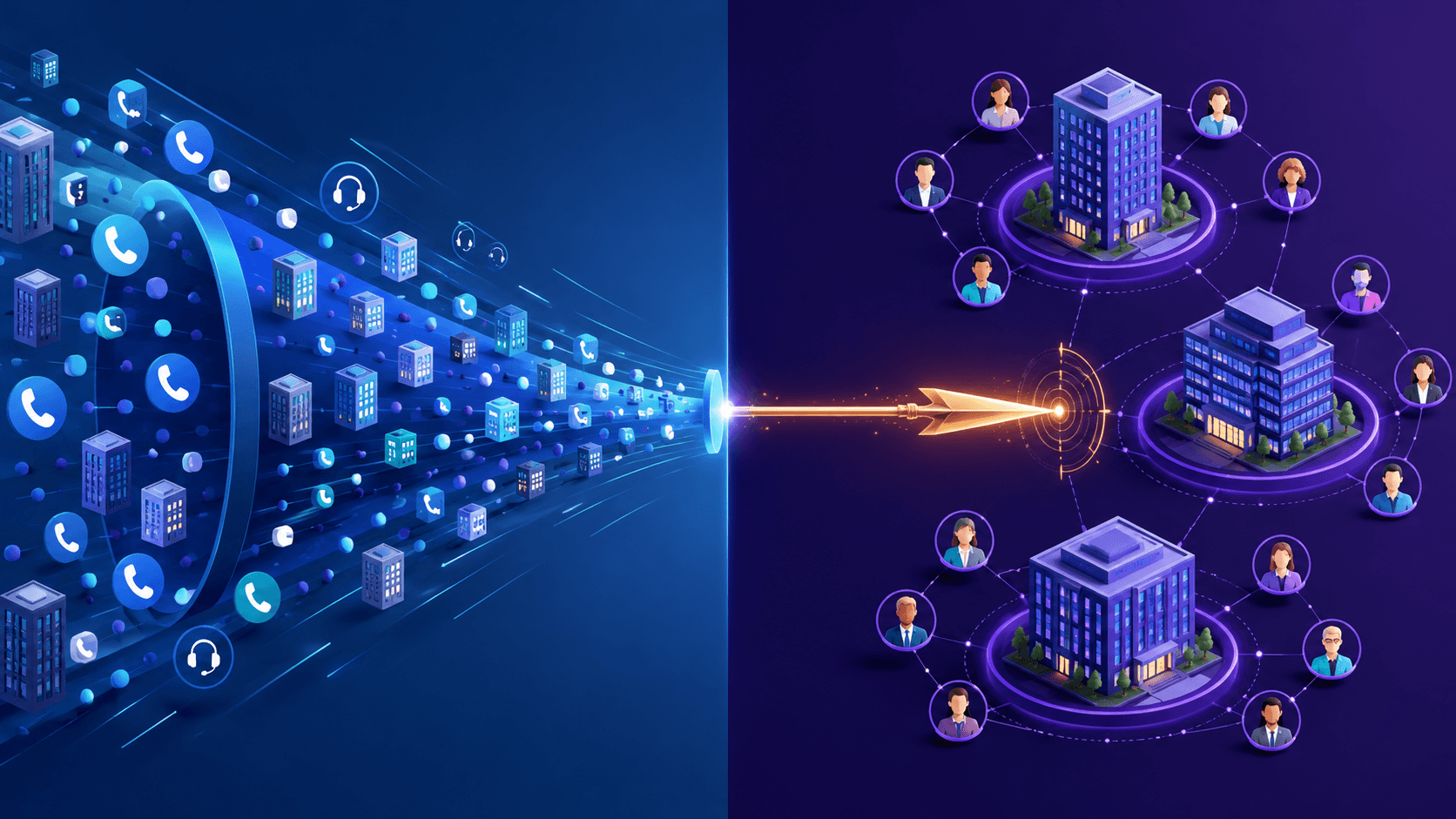
The Funnel Doesn't Exist Anymore
The mental model that's guided GTM strategy for decades assumes a human moves through stages. Awareness. Consideration. Decision. Your sequences and nurture tracks and SDR cadences all exist because people need time to research, compare, get internal buy-in, and eventually talk to sales.
An AI agent doesn't need time. It needs data.
When a procurement bot evaluates your solution against competitors, it's not reading your blog posts for thought leadership vibes. It's parsing structured data. Checking API documentation. Scanning reviews for sentiment patterns. Matching capabilities against requirements with a specificity that would take a human analyst weeks.
The buyer journey isn't accelerating. It's collapsing. A process that took months now takes minutes. And the winners won't be the companies with the best sales pitch. They'll be the ones whose information is cleanest, most accessible, and easiest for machines to evaluate.
This probably isn't what your demand gen team is optimizing for.
Marketing to Machines
Think about how your website works right now. It's designed for humans. Emotional headlines. Social proof. Friction that forces form fills so you can capture leads and feed them into sequences.
None of that matters to an agent.
What matters is whether your pricing is programmatically accessible or buried in a "contact sales" black hole. Whether your product capabilities are structured in a way that can be compared against a requirements matrix. Whether your integration documentation is complete enough that an agent can assess technical fit without scheduling a call.
The companies that figure this out first will have an immediate advantage. Not because they're better at selling, but because they're actually buyable when the buyer is a bot.
This is a different skillset than writing compelling email copy. It's infrastructure work. Data architecture. API design. The unsexy stuff that most GTM teams have happily ignored because it lived in engineering's domain.
This is about to change.
RevOps Becomes the Strategic Function
Here's where it gets interesting for the people who've spent years being treated as "sales support."
When agent-to-agent commerce becomes real - and it's becoming real faster than most executives realize - the function that understands data flows, system integrations, and cross-functional process design suddenly isn't a back-office cost center. It's the architect of whether your company can transact in the new economy.
Think about what RevOps actually knows. How data moves between marketing automation and CRM. Where the gaps are in your customer record. Which integrations are held together with duct tape and prayer. What your actual conversion paths look like versus the fantasy version in your board deck.
That knowledge becomes strategic when the question shifts from "how do we manage our pipeline" to "how do we make our entire GTM motion machine-readable."
The CRO who still thinks RevOps exists to clean up Salesforce data and build dashboards is going to have an uncomfortable 2026. The one who realizes they're sitting on the function that could actually architect an agent-ready revenue engine has a shot at winning.
The Human Paradox
Here's the part that might seem contradictory but isn't.
Gartner published research suggesting that by 2030, 75% of B2B buyers will actually prefer sales experiences that prioritize human interaction over AI. This seems to conflict with everything about agent-driven buying until you realize what it's actually saying.
When the transaction gets automated, the human moments become more valuable. Not less.
The procurement bot handles vendor evaluation, initial negotiation, compliance checking. The human steps in for strategic partnership discussions, complex customization decisions, the moments where trust and judgment matter more than data.
This means fewer human touchpoints in your GTM motion, but each one matters exponentially more. The SDR who books meetings that go nowhere becomes worthless. The senior AE who can navigate a genuine strategic conversation becomes priceless.
Your GTM org probably isn't structured for this. Most companies have inverted the model, with lots of junior people handling high-volume transactional work and a small number of senior people doing strategic deals. When bots eat the transactional layer, that pyramid flips.
Is Your Company Ready?
Here's a quick way to stress test your readiness for agent-to-agent commerce. Try to answer these questions about your own organization:
- Can a machine access your pricing without talking to a human? Not a pricing page with ranges? Actual, qualified pricing that an agent could use to compare you against alternatives.
- Is your product capability data structured or is it scattered across PDFs, webinars, and sales decks that require human interpretation?
- Could an integration exist between your system and a customer's procurement platform without a six-month implementation project?
- If a buyer's agent queried your company at 3am on a Saturday, would it get useful information or a form submission confirmation?
Most companies fail all four of these. Which means most companies are currently invisible to the buying infrastructure that's being built right now.
The Window
The protocols for agent commerce are still being written. A2A, MCP, ACP. These standards are emerging but not locked in. The procurement bots are sophisticated but not ubiquitous. The companies deploying buyer-side agents are early adopters, not the majority.
This is the window.
In eighteen months, having an agent-ready GTM infrastructure will be table stakes for enterprise sales. The companies that build it now will have compounding advantages in data quality, integration depth, and transaction velocity. The ones that wait will be playing catch-up against competitors who've already figured out how to sell to machines.
The question isn't whether this shift is coming. The procurement AI market is growing at 40% annually. The protocols are being published by Google, Stripe, and every major cloud provider. The infrastructure is being built whether your GTM team is paying attention or not.
The question is whether you'll be ready when your biggest customer isn't a person.