There was a brief, beautiful moment where every B2B sales leader was promised the same dream:
“Hire an AI SDR. Fire the humans. Wake up to pipeline.”
It was a compelling pitch. Outbound is repetitive. SDR teams are expensive. CRMs are messy. Reps hate logging activity. Prospects ignore most emails. Founders hate building sales process almost as much as they hate being told they need to build sales process.
So the idea of an autonomous AI SDR was irresistible.
Unfortunately, like most irresistible things in sales tech, it came with an annual contract, a very confident demo, and some fine print.
The problem is not that AI is useless in sales. That is obviously wrong. AI is incredibly useful in sales.
The problem is the idea that AI should fully replace the human parts of selling.
That is where the category got over its skis.
The AI SDR promise broke in the real world
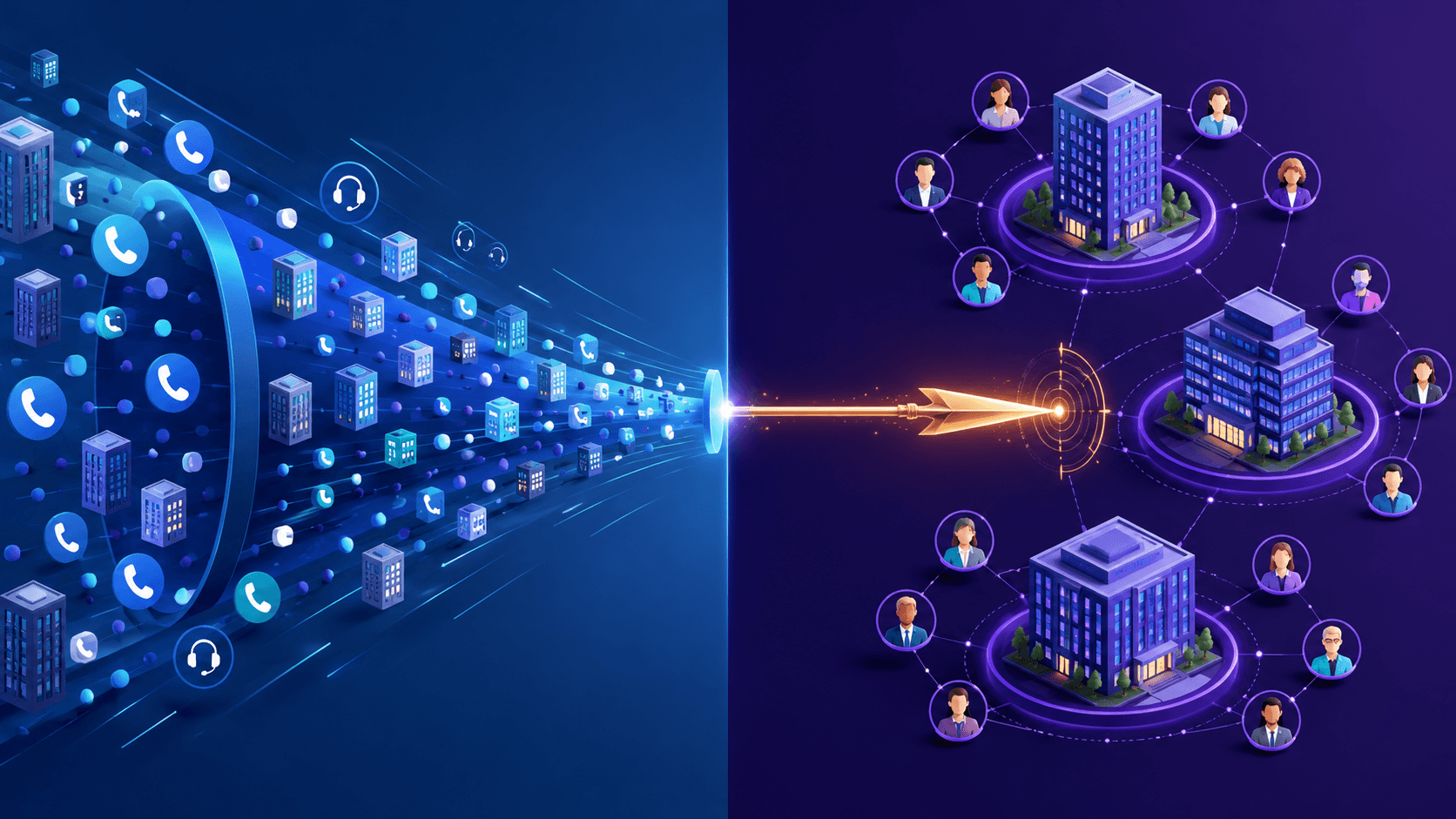
Tools like 11x, Artisan, AiSDR, and others emerged with a bold thesis: automate the SDR function end to end. Find prospects, write emails, send sequences, handle replies, book meetings, and update the CRM.
In theory, great.
In practice, outbound sales is not just a task queue. It is ambiguous, context-heavy, and weirdly human. A good seller is constantly reading between the lines. Is this company actually in market? Is this reply a polite brush-off or a real buying signal? Is the prospect pushing back on price because they have no budget, or because procurement has trained them like a very boring hostage negotiator?
AI struggles when the workflow depends on judgment, trust, timing, nuance, and incomplete information.
That is why a lot of AI SDR deployments underperform. The emails sound “personalized” in the same way every hotel lobby smells “premium.” The targeting looks good in a dashboard but breaks when you inspect the accounts. Replies still need a human. The CRM still needs cleanup. And worst of all, the team starts optimizing for activity metrics instead of revenue.
Emails sent. Opens. Replies. Meetings booked.
Useful signals, sure. But nobody pays your company in opens.
The better model: AI does the work humans hate
The real opportunity is not replacing sellers. It is removing the parts of selling that make good sellers worse.
Nobody becomes an elite AE because they are passionate about copying call notes into HubSpot.
Nobody builds a founder-level customer relationship by spending 17 minutes deciding whether a lead should move from “Contacted” to “Working.”
Nobody got into sales because they dreamed of updating a sequencer after a prospect said, “Circle back next quarter.”
This is where AI should own the workflow.
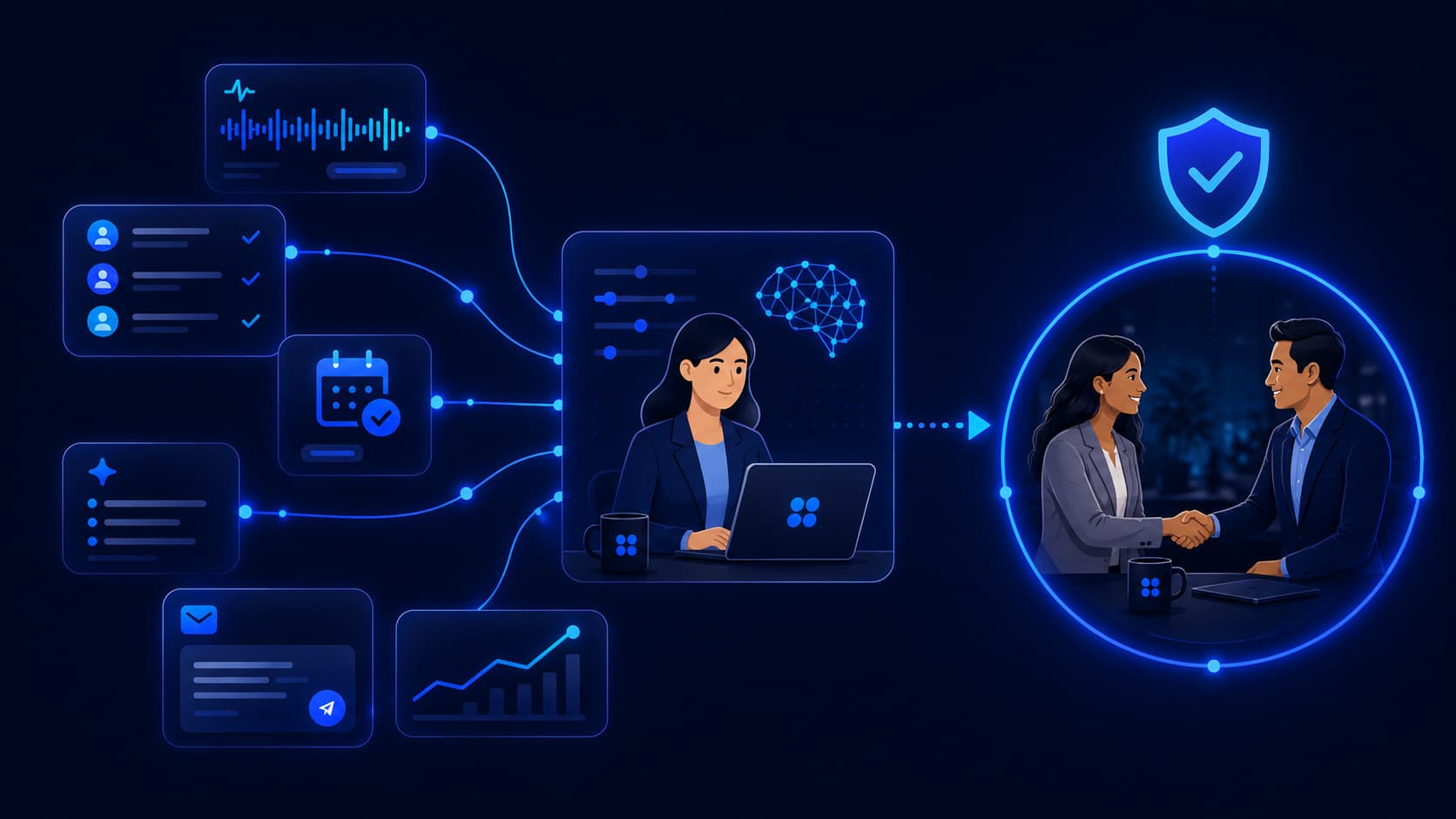
AI should prospect. AI should enrich accounts. AI should prep the rep before the call. AI should surface the right talk track in real time. AI should log the call, summarize the conversation, update the CRM, draft the follow-up email, trigger the next step, and keep the sequencer clean.
The human should talk to the human.
That sounds obvious, but apparently the industry needed a few hundred million dollars in funding announcements to rediscover it.
Human-in-the-loop is not a compromise
Human-in-the-loop gets described like a fallback plan. Like the AI almost works, but unfortunately we still need a person nearby in case it lights the microwave on fire.
That is the wrong framing.
Human-in-the-loop is the product strategy.
In B2B sales, the human is not a bug in the system. The human is the point of the system.
People still buy from people. They buy because someone understood their problem. They buy because a rep asked a better question than the deck answered. They buy because trust was built over multiple conversations. They buy because someone navigated the messy internal politics, the pricing concern, the security review, the “can you send me a one-pager?” and the “my CEO wants to meet your CEO” moment.
AI can help at every step of that process.
But when a deal gets real, humans matter more, not less.
They matter on discovery calls. They matter in negotiation. They matter when the buyer is nervous. They matter when the champion needs coaching. They matter when the relationship moves from “vendor evaluation” to “we are putting our name next to this decision.”
AI should make those moments more frequent and better prepared.
It should not pretend those moments do not exist.
The workflow that actually works
The winning B2B sales workflow looks something like this:
AI identifies the right accounts, enriches the data, and creates a prioritized list based on your ICP, CRM history, call outcomes, buying signals, and campaign performance.
AI helps draft outbound messaging, but humans still own the strategy, positioning, and quality bar.
AI handles the busywork of sequencing, follow-ups, call summaries, CRM updates, meeting prep, and post-call tasks.
AI supports live selling with real-time context: the right objection response, the right discovery question, the right pricing anchor, the right reminder that this prospect mentioned budget pressure three calls ago.
Humans do the parts that actually require being human: building trust, creating urgency, navigating ambiguity, negotiating, meeting in person, telling stories, and turning a business conversation into a business relationship.
That is the model we believed in when we built TwinsAI.
Not “replace your reps.”
More like: stop making your reps behave like underpaid CRM janitors.
The numbers are better when humans stay in the loop
This is not just philosophical. It shows up in the data.
TwinsAI Conversation Cards drive 26% more pipeline by giving reps the right context while the conversation is actually happening. Not three days later in a Gong review. Not buried in a Slack thread. In the moment.
Our AI Dialer drives a 4:1 conversation-to-dial-time ratio, because reps should spend their phone time talking to humans, not listening to ringing, voicemails, phone trees, and the slow death of ambition.
Phone-based sellers using TwinsAI generate 3.2x more meetings with the same amount of phone time compared to legacy platforms.
That is the point.
The best sales AI does not remove the seller from the process. It removes everything around the seller that keeps them from selling.
AI SDRs were the wrong question
The question was never, “Can AI replace my SDR team?”
The better question is:
“What parts of my revenue workflow should no human ever have to do again?”
That is where AI wins.
Let AI handle the monotony. Let AI carry the context. Let AI update the systems. Let AI make every rep faster, sharper, and better prepared.
Then let your humans do what humans are still annoyingly good at: creating trust, building relationships, negotiating deals, and occasionally having coffee with another person in real life like it is 2019.
Fully autonomous AI SDRs made a big promise.
Human-in-the-loop AI makes a better one:
Your team keeps the relationship.
AI handles the rest.
If you want to see what that looks like in practice, book a demo with TwinsAI.